GMC Trailer Brake Controller Wiring and 7-Pin Pinout
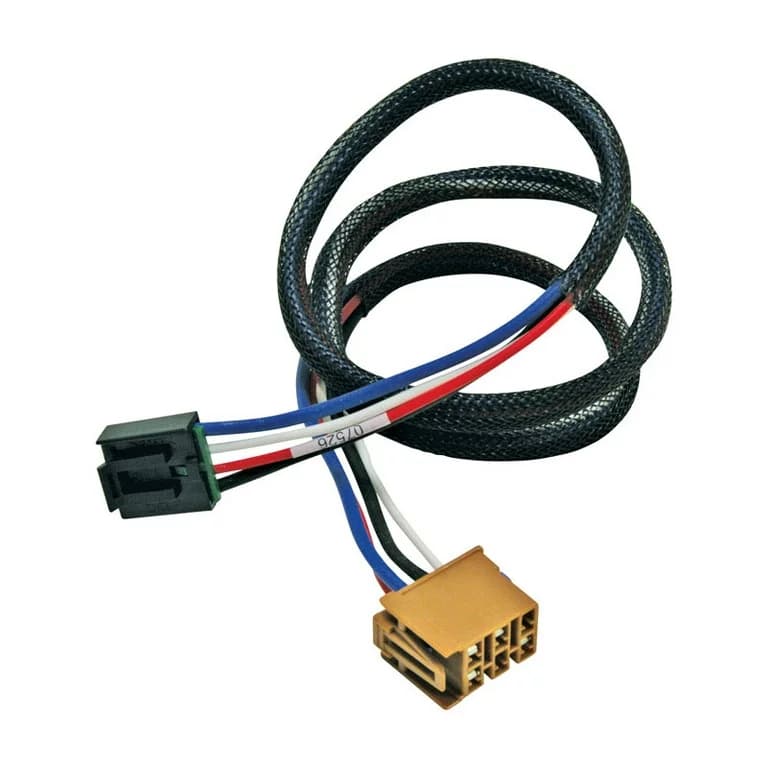
A trailer brake controller on a GMC truck needs four connections: ground, 12-volt power, a brake-pedal signal from the stop lamp switch circuit, and a brake output wire that runs back to the electric brake pin of the 7-pin trailer connector. On most aftermarket controllers those wires are white (ground), black (power), red (stop lamp signal) and blue (output to trailer brakes). Many GMC trucks built for towing already have a plug for this, so the job is often plugging in an adapter harness, not splicing. Wire colors aren't universal, though, so check each circuit with a tester before connecting anything.
7-Pin Trailer Connector Pinout
The round 7-way "RV blade" connector on GMC trucks is covered by SAE J2863, the SAE standard for the 7-position automotive/RV trailer tow connector. The pin functions below follow the numbering used on hardwired 7-way connectors, as shown in Croft Trailer Supply's connector wiring chart.
| Pin | Function | Common hardwired wire color |
|---|---|---|
| 1 | Ground (common return) | White |
| 2 | Electric brakes (controller output) | Blue |
| 3 | Tail, running and license lamps | Brown |
| 4 | 12V battery feed / charge line | Black |
| 5 | Left stop and turn | Yellow |
| 6 | Right stop and turn | Green |
| 7 | Center auxiliary (often reverse lamps) | Varies |
Colors are the weak point. The same Croft chart shows a molded 7-way cable that uses green for tail lamps and brown for the right turn signal, the reverse of the hardwired colors. Trailer makers, RV builders and truck makers don't always agree. Wire by function, not by color: confirm each wire with a circuit tester while someone works the lights and brakes.
For wire size, etrailer's 7-way wiring guide suggests at least 12 gauge for the ground, brake output and battery feed, and at least 16 gauge for the lighting circuits. Thin wire on the brake and ground circuits is a common cause of weak trailer braking.
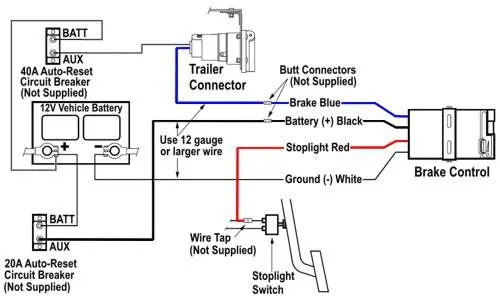
What Each Controller Wire Does
Most aftermarket electric brake controllers, including common Tekonsha and Hopkins units, use this four-wire scheme. Your controller's instructions are the final word.
| Controller wire (typical) | Connects to | What it does |
|---|---|---|
| White | Chassis ground | Return path for the controller. A weak ground causes erratic output |
| Black | 12V battery positive, through a fuse or circuit breaker | Powers the controller |
| Red | Stop lamp switch circuit (cold side) | Tells the controller the brake pedal is pressed |
| Blue | Pin 2 of the 7-way (electric brakes) | Carries the braking current to the trailer's brake magnets |
The blue wire should only carry voltage when you press the brake pedal or use the controller's manual override. Constant voltage on the blue wire means something is miswired.
GMT800 Trucks (1999-2006 Sierra, 2007 Classic)
A 2004 Sierra belongs to GM's GMT800 truck generation, so the wiring steps for a "2004 GMC brake controller" are the same as for the rest of that generation. According to etrailer's install guide for 1999-2006 Chevy/GMC pickups, how easy the job is depends on whether the truck came with the factory 7-way connector.
Trucks with the factory 7-way
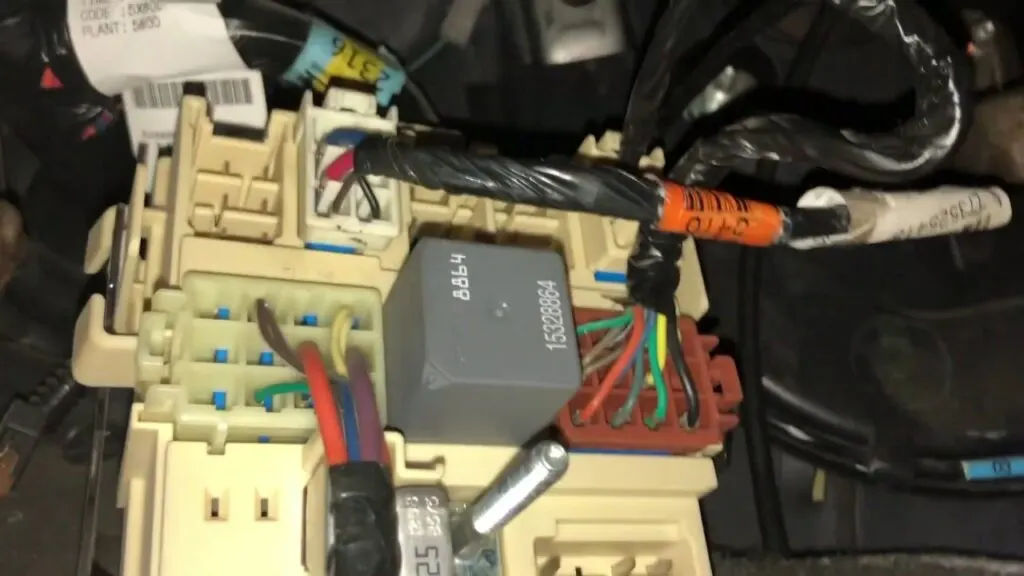
The controller plugs into an electrical junction box on the driver's side under the dash, to the left of the brake pedal. The truck was supplied with a brake control adapter that connects to the controller at one end and plugs into that box at the other. If the adapter is missing, etrailer lists replacements by year:
| Model years | Replacement brake control adapter (etrailer) |
|---|---|
| 1999-2002 | 3025-S |
| 2003-2006, plus 2007 Classic | 3015-S |
Once the adapter is plugged in and the controller is mounted, the vehicle side is done. If the controller has no power, a frequent cause is a missing fuse in the underhood accessory fuse block. etrailer's guide shows a 30-amp fuse next to the positive post for controller power, with some smaller controllers calling for 20 amps. Check your controller's instructions and the owner's manual for the right value.
Trucks without the factory 7-way
The same adapter still plugs into the under-dash junction box, but you'll need to finish the rear circuits yourself:
- Under the hood: Near the accessory fuse block on the cab side, etrailer describes a blue wire with a plug (the brake output circuit) and a red wire with a ring terminal (power). The red wire goes on the positive post with the controller fuse installed. The blue wire gets joined to a new brake wire that runs back to the 7-way. A separate fused hot lead (etrailer's guide uses a 40-amp fuse or circuit breaker) feeds the 7-way's 12V pin.
- At the rear: Many trucks have a bundle of lighting wires above the spare tire. In etrailer's guide these are yellow (left turn/stop), dark green (right turn/stop), brown (tail lamps) and white (ground), with a light blue wire for a camper-shell brake lamp and a light green wire for reverse lamps sometimes found further back in the loom.
Test before you splice. Trucks this old have often been rewired, and the colors on your truck may not match any guide.
Newer GMC Trucks (2014 and Later)
Many 2014-and-newer Sierras and Yukons were built with GM's integrated trailer brake controller (option JL1), which needs no aftermarket wiring at all. GM has said that system can't be added later to trucks built without it. Those trucks usually take an aftermarket controller through a plug-in harness made for that generation, and the harness manufacturer's fit guide is the place to confirm which one. For how the factory system works and how to set it up, see our 2024 GMC Sierra 1500 brake controller guide. If a factory controller shows a wiring fault, start with our Service Trailer Brake System guide.
Testing the Installation
- With the trailer unplugged, confirm the controller powers up and the blue wire shows no voltage until you press the brake pedal or the manual override.
- Plug in the trailer and confirm the controller detects it.
- Check every lighting function at the trailer: running lamps, both turn signals, brake lamps and reverse (if used).
- Set the gain with a road test at about 20-25 mph. Our guide on how to use a GMC trailer brake controller walks through it.
Troubleshooting Wiring Problems
| Symptom | Likely wiring cause |
|---|---|
| Controller completely dead | Blown or missing fuse/breaker on the power feed, bad controller ground |
| Controller on, but says no trailer connected | Corroded 7-pin contacts, broken blue wire, poor trailer ground |
| Trailer brakes weak even at high gain | Undersized or corroded brake/ground wiring, a bad ground at the trailer frame |
| Trailer brakes on all the time | Blue wire shorted to a 12V source, or the red wire on the wrong side of the stop lamp switch |
On GMT800 trucks, a stuck-on or dead brake lamp can also come from the truck's own brake lamp switch. Some 2004-2009 Colorado and Canyon trucks from the same era were recalled for exactly that, so rule out the switch before you blame the controller.
Frequently Asked Questions
Which pin on a 7-pin connector is for the brake controller?
Pin 2, the electric brake terminal. The controller's blue output wire connects to it, and on a typical hardwired connector that circuit is also blue. Confirm with a tester, because molded cables and older trucks don't always follow the common color code.
Where does the brake controller plug in on a 2004 GMC Sierra?
On trucks with the factory 7-way, into the electrical junction box on the driver's side under the dash, to the left of the brake pedal, using a brake control adapter. etrailer lists 3015-S as the replacement adapter for 2003-2006 trucks and 2007 Classic models.
Can I install a brake controller on a truck without a factory 7-way?
Yes. Plug the adapter into the under-dash junction box, wire power and the brake output circuit at the underhood fuse block, and run brake and 12V wires back to a new 7-way connector. A 4-way to 7-way adapter kit handles the rear connection on trucks that only have a flat 4-pin.
Why does my brake controller say no trailer is connected?
It's almost always the connection: corroded pins in the truck's 7-way or the trailer plug, a broken blue brake wire, or a poor ground on the trailer. Worn trailer brake magnets can also stop the controller from detecting the trailer's brakes.
Safety note: This guide is for general informational purposes. Brake systems are safety-critical — if you're unsure at any step, or the work requires specialized tools, have it inspected or completed by a qualified technician.
Related Guides
 GMC Brakes
How to Use a GMC Trailer Brake Controller
How to set up and use a GMC trailer brake controller, factory or aftermarket: gain, the 20-25 mph test, manual override and common faults.
 GMC Brakes
How to Turn Off The Trailer Brake System GMC Sierra
Discover how to safely turn off the trailer brake system GMC Sierra with our easy guide, ensuring optimal towing performance and safety.
 GMC Brakes
Service Trailer Brake System on GMC: Causes and Fixes
What the Service Trailer Brake System message means on a GMC Sierra or Yukon, the likely causes, and the order to check them before towing again.
 GMC Brakes
Buying a 2015 GMC Sierra Trailer Brake Control Module
Before replacing the trailer brake control module on a 2015 GMC Sierra, check its location, cost, common faults, and OEM vs. aftermarket options.
 Yukon
YukonGMC Yukon Trailer Brake Troubleshooting
When GMC Yukon trailer brakes are dead, weak or locking up, check the 7-way connector, fuse, gain setting and trailer magnets, in that order.
 Sierra
GMC Sierra Trailer Brake Gain Settings — 1500 vs 2500
GMC Sierra trailer brake gain is set with GM's 20-25 mph lever test, not a chart. Here's how, and why a 2500 often runs higher gain than a 1500.