GMC Service Brake System Message and Brake Recalls
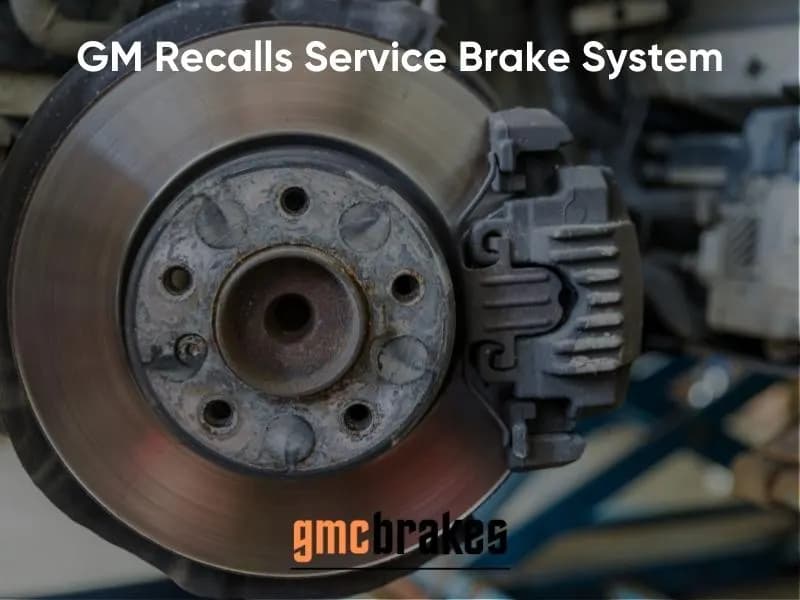
A "Service Brake System" style message or a lit brake system warning light on a GMC means the truck has detected a fault in the brake hydraulics, the power assist, or the electronic brake control module (EBCM), and it should be inspected before you rely on it. Several of these faults were the subject of official GM safety recalls, so the first step is a free recall check by VIN; the second is a scan-tool read of the stored brake codes.
The exact wording on the Driver Information Center (DIC) varies by model year and trim. For a side-by-side list of GMC brake lights and messages, see our GMC brake warning light and message chart.
What the Brake System Warning Means
GM's 2020 Sierra owner's manual describes the red brake system warning light this way: it should come on briefly at start-up, and if it comes on and stays on, "there is a brake problem" and the system should be inspected right away. The same manual adds two points worth knowing:
- On trucks equipped with electric brake boost, vehicle speed may be limited when the brake system warning light is on. The pedal might be harder to push or go closer to the floor, and stopping can take longer. If the light stays on, GM says to have the vehicle towed for service.
- If the ABS light and the brake system light are on together, ABS is not working and there is also a problem with the regular brakes.
If only the amber ABS light is on, the truck still has normal base braking but no antilock function. Our guide to ABS brakes in GMC vehicles covers that case.
Related messages that are easy to confuse
| Message or light | What it usually points to | Guide |
|---|---|---|
| Red brake light / brake system warning | Low fluid, parking brake applied, hydraulic or boost fault | Why won't my Sierra brake light turn off? |
| "Service Brake Assist" | Loss of power brake assist (vacuum or hydraulic boost) | Sierra Service Brake Assist warning |
| "Service StabiliTrak" plus brake light | Shared sensor or EBCM fault | Service StabiliTrak and brakes |
| "Reduced Braking Available" | Power assist fault (Yukon and similar) | Yukon Reduced Braking Available |
| "Service Trailer Brake System" | Integrated trailer brake controller fault | Service Trailer Brake System on GMC |
GM Brake Recalls Affecting GMC Trucks and SUVs
The table below lists GM brake-system recalls that appear in NHTSA's recall database for GMC Sierra and Yukon models. Every row was checked against the NHTSA campaign record. "Units" is the potential population GM reported for the whole campaign, including Chevrolet and Cadillac models where they share the defect.
| NHTSA campaign | GM number | GMC models named | Problem | Remedy (free at dealer) |
|---|---|---|---|---|
| 04V-045 | — | Sierra 2003-2004 listed in NHTSA lookup; certain trucks, SUVs and vans | Out-of-spec Hydro-Boost relief valve bore; valve O-ring may fracture, slightly raising pedal effort | Replace Hydro-Boost relief valve |
| 05V-043 | — | Sierra 2004-2005 listed; vehicles with Bosch Hydro-Boost | Hydro-Boost pressure accumulator may crack and separate; fluid loss raises steering and braking effort | Test Hydro-Boost; replace assembly if it fails |
| 19V-645 | N192268490 | 2014-2018 Sierra, 2015-2018 Yukon | Engine-driven vacuum pump output may drop over time, reducing brake assist | Reprogram EBCM |
| 19V-761 | N192261050 | 2014-2018 Sierra 1500, 2015-2020 Yukon (5.3L, 3.08 axle, 4WD) | Failed wheel-speed sensor at 41-60 mph in 4WD/Auto can trigger driveline protection and brake one wheel, pulling the truck | Reprogram EBCM |
| 19V-889 | N192268090 | 2019 Sierra 1500 | EBCM software error can disable ESC and ABS without lighting the warning lamps | Reprogram EBCM |
| 20V-055 | N192268091 | 2019 Sierra 1500 | Updated EBCM software could disable electronic brake assist | Reprogram EBCM |
| 20V-116 | N202294420 | 2020 Sierra 1500 | Front and/or rear caliper bolts may not have been heat treated and can break | Replace caliper bolts |
| 20V-603 | N202300860 | 2018 Sierra 1500 and Yukon (5.3L or 6.2L) | Vacuum pump output decline, same condition as 19V-645 | Reprogram EBCM |
| 21V-579 | N212340970 | 2021 Yukon (small population) | Dealer technicians may have calibrated the brake system incorrectly, affecting ESC, ABS and trailer braking | Recalibrate brake control module |
| 24V-674 | N242447990 | 2023 Sierra 1500, 2023-2024 Yukon / Yukon XL | EBCM software may not show a warning light when brake fluid is lost | EBCM software update, over the air or at a dealer |
A recall listing for your model year does not mean your specific truck is included. Recall populations are defined by build dates and equipment, so the only reliable answer comes from a VIN check.
The 2014-2018 vacuum pump recall (19V-645) in detail
This is the recall most owners mean when they search for a GM brake recall. It is also the largest one in the table, with a potential population of 3,456,719 vehicles across Chevrolet, GMC and Cadillac models.
According to GM's Part 573 safety recall report filed with NHTSA:
- The engine-mounted vacuum pump is lubricated with engine oil through a filter screen. Debris such as oil sludge can build up on that screen, cut oil flow, and gradually reduce the vacuum the pump makes. GM notes that skipping recommended oil change intervals could contribute.
- The trucks have a secondary hydraulic brake assist that takes over when vacuum drops, but as originally calibrated it was limited at lower speeds. The condition was most noticeable at low speed with light brake application.
- Warning signs: a harder pedal, vibration in the pedal, a ticking noise from the engine bay, and a "Service Brake Assist" message in the DIC, which GM says appears within two to five minutes of vacuum falling below 10 kPa. A diagnostic trouble code is also stored.
- NHTSA opened a preliminary evaluation (PE18-012) on November 20, 2018. GM first extended warranty coverage for vacuum pump replacement, then decided on the recall in August 2019. The remedy began October 8, 2019.
- The fix is an EBCM recalibration that makes better use of the hydraulic brake boost when vacuum assist is depleted. It does not replace the pump.
Because the remedy is software, a truck that already had the recall done can still develop a weak vacuum pump. If the Service Brake Assist message returns after the update, the pump itself needs to be diagnosed. See our Service Brake Assist guide for that follow-up.
Older GMT800 Sierras (1999-2007): Brake Problems That Were Not Recalls
For a 2003 Sierra, NHTSA's database lists only two brake-system campaigns, both tied to Hydro-Boost equipped trucks (04V-045 and 05V-043), plus a manual-transmission parking brake campaign (05V-161). Two common brake complaints on these trucks sit outside any recall and are ordinary repairs:
Corroded brake lines. Road salt and de-icing chemicals attack the steel lines along the frame. Warning signs are a dropping fluid level, wet spots near the lines, or a pedal that feels soft or sinks. Washing the underbody through winter and again in spring slows corrosion. Many shops bend replacement lines from bulk tubing; pre-formed line kits made to factory shape are also sold and save time. Our GMC brake lines guide covers routing and replacement.
A failing vacuum booster. A simple check: with the engine off, pump the brake pedal several times to use up stored vacuum, hold the pedal down, and start the engine. With a working booster, the pedal drops slightly as the engine starts. If it stays hard and does not move, the booster is not getting vacuum or has failed internally. Also listen for a hiss at the pedal. More detail is in our GMC brake booster guide. Trucks with Hydro-Boost (power steering pressure instead of vacuum) behave differently; see Hydro-Boost with no power steering and no brakes.
How to Check and Get a Recall Fixed
- Find your VIN on the lower driver-side windshield corner, the driver door jamb label, or your registration.
- Run it through NHTSA's VIN lookup at nhtsa.gov/recalls, or GMC's owner center recall search. Both show open recalls for that exact vehicle.
- Call a GMC dealer with the campaign or GM recall number from the table above. Recall repairs are free regardless of mileage or whether you are the original owner.
- Ask for the repair order after the visit. It shows which campaign was completed, which helps if the message comes back later.
- If no recall applies, have the brake codes read with a scan tool that can talk to the EBCM. A generic engine code reader often cannot see brake module codes.
Non-recall repair costs vary widely by region, shop, and whether the fix is a sensor, a module, a booster, or brake lines. Get a written estimate before work starts.
Frequently Asked Questions
Is it safe to drive with the brake system warning light on?
GM's owner's manual says the brake system might not be working properly when this light is on, and that if the light stays on after you have pulled over and stopped, the vehicle should be towed for service. If the pedal feels normal and the light goes out after a restart, still get it checked soon rather than waiting.
Does the vacuum pump recall replace the pump?
No. Recalls 19V-645 and 20V-603 reprogram the EBCM so the backup hydraulic brake assist works better when vacuum drops. If the pump itself is worn, that is a separate repair, although GM also extended warranty coverage on the pump for the affected trucks. Ask the dealer whether that coverage still applies to your VIN and mileage.
My 2003 Sierra has a brake problem. Is there a recall for it?
Only if your truck is in one of the listed campaigns, mainly the Hydro-Boost recalls for equipped trucks. Rusted brake lines and worn vacuum boosters on GMT800 Sierras are normal wear repairs, not recall items. A VIN check confirms whether any open campaign applies.
Can a used truck still get a recall repair?
Yes. Safety recalls follow the vehicle, not the owner. If a campaign is open on your VIN, a GMC dealer will perform the remedy free of charge.
Why did my ABS and StabiliTrak lights stay off even though ABS was not working?
That was the defect in recall 19V-889 on some 2019 Sierra 1500 trucks: a software error could disable ESC and ABS without turning on the warning lamps. The EBCM reprogram fixes it, so a VIN check is worth doing on any 2019 model.
Sources
Safety note: This guide is for general informational purposes. Brake systems are safety-critical — if you're unsure at any step, or the work requires specialized tools, have it inspected or completed by a qualified technician.
Related Guides
 GMC Brakes
GMC Brake Warning Light & Message Chart
A quick-reference chart of GMC brake warning lights and dashboard messages — what each one means and which of our guides covers it in detail.
 Yukon
YukonGMC Yukon "Reduced Braking Available" Message Explained
Reduced Braking Available on a GMC Yukon means the brakes have lost normal power assist. Learn the common causes, safe checks and when to see a technician.
 Sierra
GMC Sierra Service StabiliTrak and Brakes: Are They Related?
StabiliTrak and a GMC Sierra's brakes share sensors and hydraulic hardware, so a Service StabiliTrak message often appears with a brake warning.
 Sierra
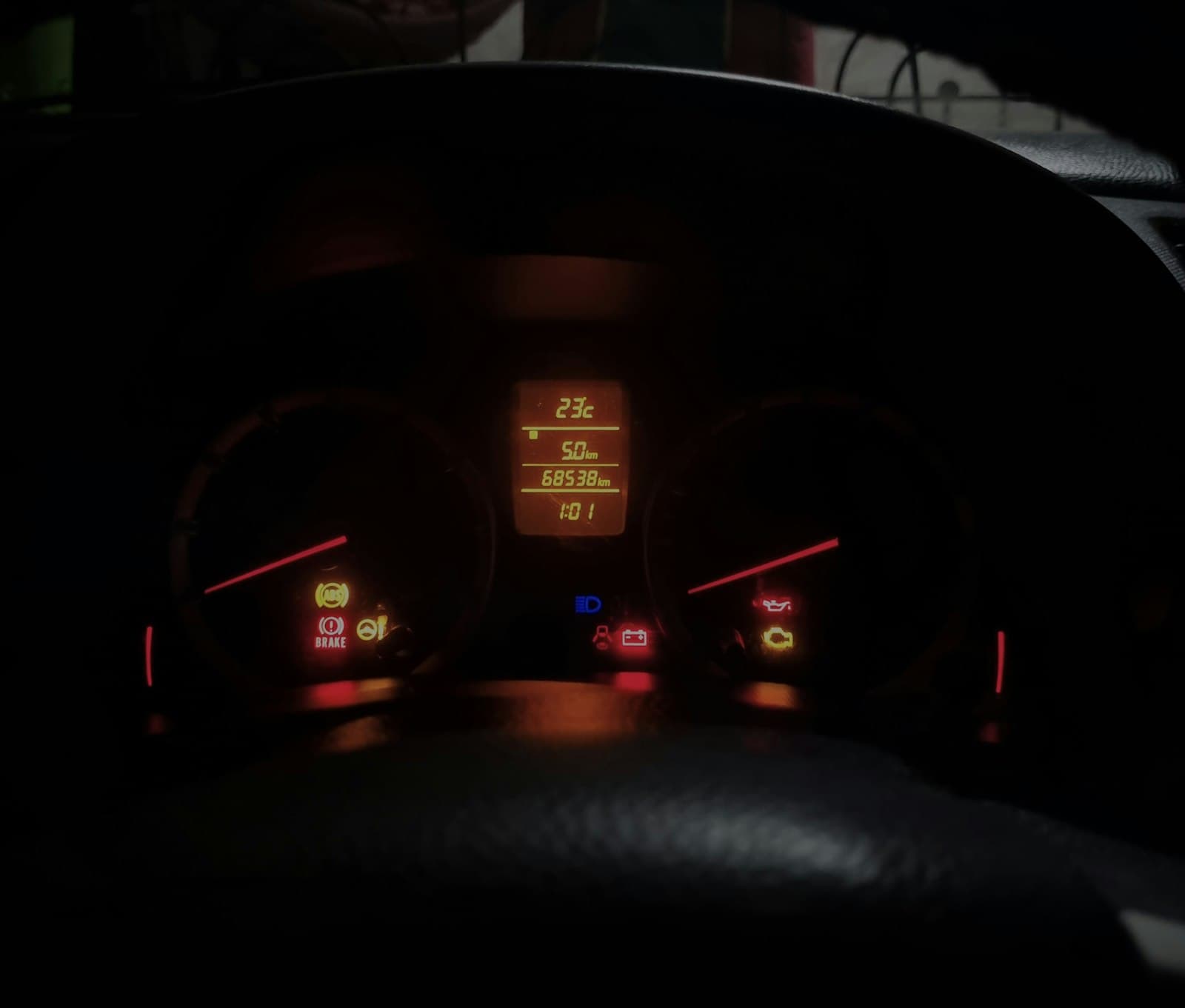
GMC Sierra Service Brake Assist Light: What It Means
A Service Brake Assist message on a GMC Sierra means the system that adds pressure in hard stops has a fault. See common causes and what to check first.
 Acadia
GMC Acadia Brake Warning Light Meanings
A rundown of the brake-related warning lights and dashboard messages you might see on a GMC Acadia, what each one generally means, and how urgently to act.
 GMC Brakes
How to Bed In New Brake Pads and Rotors on a GMC
How to bed in new brake pads and rotors on a GMC: 6 to 10 moderate stops from 30 to 35 mph, 2 to 3 firmer stops from 40 to 45 mph, then a cool-down.