GMC ABS Brakes: How They Work and Why the Light Comes On
The anti-lock brake system (ABS) on a GMC watches each wheel's speed and, when a wheel is about to lock during hard braking, rapidly releases and reapplies brake pressure at that wheel so the tire keeps rolling and you can still steer. When the amber ABS light stays on, the system has found a fault and switched the anti-lock function off. Normal braking still works, and the most common cause is a failed wheel speed sensor or its wiring.
What the ABS System Is Made Of
Federal brake standards define ABS as the part of the service brake system that automatically controls wheel slip by sensing each wheel's rotation, passing those signals to a controller, and using modulator devices to adjust brake force in response (49 CFR 571.135, FMVSS 135). On a GMC, that works out to four main parts:
| Component | What it does | Common failure |
|---|---|---|
| Wheel speed sensors (one per wheel on modern models) | Read a toothed or magnetic tone ring to report wheel speed | Broken sensor, damaged wire, corroded connector, rust under the sensor |
| Tone ring / encoder | Gives the sensor a signal pattern as the wheel turns | Cracked, rusted, or contaminated ring; often part of the hub bearing |
| Electronic Brake Control Module (EBCM) | Compares wheel speeds, decides when to intervene, runs self-tests | Internal fault, power or ground problem, water in the connector |
| Hydraulic unit (modulator) with pump | Inlet and outlet valves per circuit plus a pump that returns fluid | Stuck valve, failed pump motor, air trapped inside |
On most current GMC models, the EBCM and hydraulic unit are bolted together as one assembly, and the same hardware also runs traction control, StabiliTrak, and brake assist. For module-level diagnosis on a newer truck, see our 2020 Sierra 1500 brake control module guide. For older SUVs, see the 2003 Yukon EBCM guide.
How ABS Works During a Stop
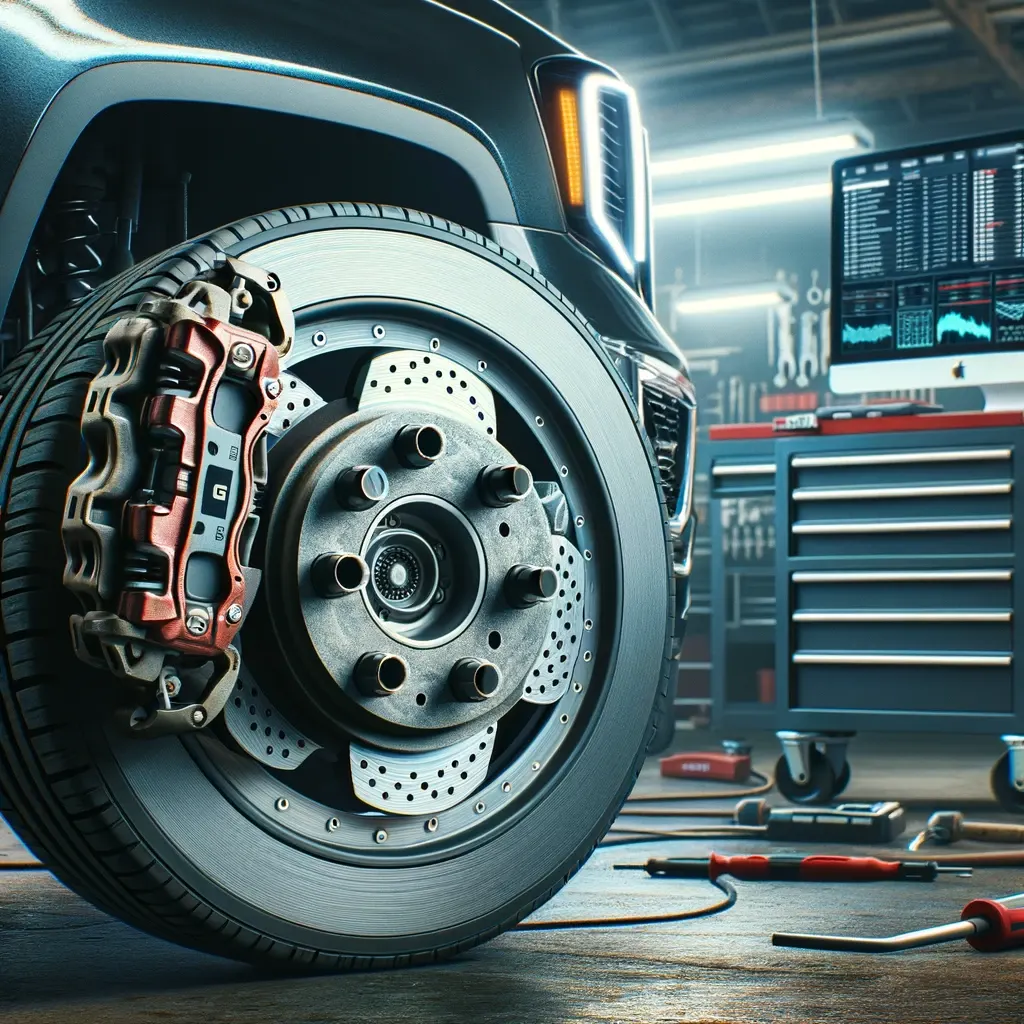
- Normal braking. The ABS valves stay open and pressure passes straight from the master cylinder to the wheels. ABS does nothing.
- A wheel starts to lock. Its speed drops much faster than the others, which the EBCM reads as impending lockup.
- Hold. The EBCM closes that wheel's inlet valve so pressure can't rise any further.
- Release. If the wheel is still slowing too fast, the outlet valve opens and bleeds off some pressure. The pump returns that fluid to the master cylinder side.
- Reapply. Once the wheel speeds back up, pressure builds again. The cycle repeats many times per second until the stop ends or the wheel no longer needs help.
That cycling is what you feel as pulsing in the pedal and hear as a buzz or grinding from the hydraulic unit. It's normal. In a hard stop, keep firm, steady pressure on the pedal and steer. Pumping the pedal on an ABS-equipped vehicle works against the system.
What ABS Does and Doesn't Do
ABS's main job is keeping the tires rolling so the vehicle stays steerable and stable under hard braking. On wet or dry pavement, that usually also means stopping distances similar to or shorter than with locked wheels. On loose gravel or deep snow, though, a locked tire can build a wedge of material in front of it. There, ABS-controlled stops can be longer, which is why drivers sometimes notice the pedal pulsing and the truck "running on" at low speed on gravel.
ABS also can't add grip that isn't there. Worn tires, excessive speed, or a hydraulic problem in the base brakes limit what it can do.
ABS on GMC Trucks: A Short History
GM's full-size pickups adopted ABS in stages. The 1988-1998 C/K Sierra (GMT400) first used rear-wheel-only anti-lock, which on 4x4 trucks worked only in two-wheel drive. Four-wheel ABS replaced it on pickups from the 1995 model year. Four-wheel ABS carried over into the 1999 redesign and every Sierra since, and electronic stability control (StabiliTrak) builds on the same hardware. Federal standard FMVSS 126 has required stability control on all light vehicles of 10,000 pounds GVWR or less built since September 1, 2011 (49 CFR 571.126).
The ABS Warning Light
The amber ABS light should come on briefly each time you start the vehicle as a bulb check, then go out. Federal rules require this self-check. If it never lights at startup, the bulb or circuit itself needs attention.
| What you see | What it usually means | What to do |
|---|---|---|
| Amber ABS light on briefly at startup, then off | Normal bulb check | Nothing |
| Amber ABS light stays on | ABS fault stored; anti-lock disabled, normal brakes still work | Drive carefully, leave extra distance, have codes read soon |
| ABS light comes and goes | Intermittent sensor, wiring, or connector fault | Note when it happens (bumps, rain, speed); have codes read |
| ABS and red BRAKE light on together | Anti-lock off plus a possible problem in the base brakes, such as low fluid or lost rear pressure control | Check fluid level; have the truck inspected before normal driving |
| ABS light plus Service StabiliTrak / traction off | Shared sensor or module fault disabling several systems | See Service StabiliTrak and brakes |
GM owner's manuals warn that when both the ABS light and the brake system warning light are on, the anti-lock brakes aren't working and there is also a problem with the regular brakes. Modern trucks use the ABS system to share braking between front and rear axles, so a fault in that system can also let the rear wheels lock more easily in a hard stop. Treat that combination seriously.
For a quick lookup of every GMC brake warning and message, use our brake warning light and message chart.
Why the ABS Light Comes On
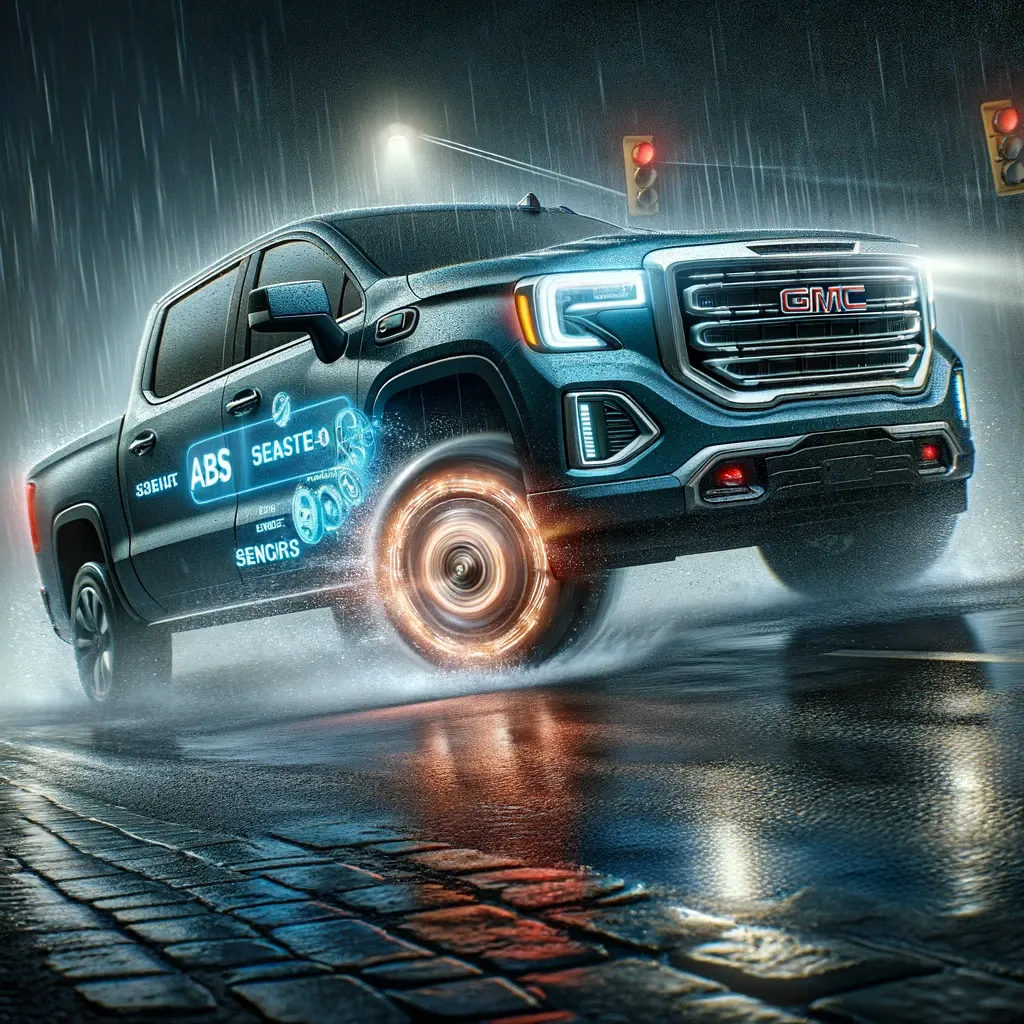
The usual causes, starting with the most common:
- Wheel speed sensor failure. The sensor, its pigtail, or its connector fails. Sensors sit right next to the brakes and take heat, water, road salt, and debris. A scan tool reading will usually point to a specific wheel.
- Wiring damage. Harnesses that flex with the suspension can chafe or break, especially near the steering knuckle and rear axle. Damage often shows up as an intermittent light over bumps.
- Rust or debris at the sensor or tone ring. Rust building up under a sensor can push it away from the tone ring and weaken the signal. A cracked or rusted tone ring does the same thing.
- Hub bearing problems. On many GMC trucks and SUVs, the front sensor mounts in or is built into the hub bearing assembly, so a worn bearing or a bearing replacement with the wrong part can set an ABS code.
- Low system voltage. A weak battery or poor ground can make the EBCM log faults, often alongside other warnings.
- Low brake fluid. This usually lights the red BRAKE lamp first, but it can appear with ABS warnings.
- EBCM or hydraulic unit fault. Internal module failures, pump motor faults, and water intrusion at the module connector are less common but more expensive.
Our GMC ABS brake lights on guide walks through a typical sensor diagnosis and repair.
Known Issue: 1999-2002 Trucks and Front Sensor Corrosion
GM issued a safety recall (bulletin 05068, NHTSA campaign 05V-379) for certain 1999-2002 Sierra and Silverado pickups, 2000-2002 Yukon, Yukon XL, Tahoe, and Suburban, and 2002 Avalanche models registered in salt-belt states. Corrosion between the front hub/bearing and the wheel speed sensor could cause unwanted ABS activation during braking at about 3.7-10 mph, lengthening low-speed stops. Dealers inspected, cleaned, and treated the mounting area, replacing the sensor where needed (GM recall bulletin 05068C via NHTSA).
If an older GMC pulses the pedal and "runs on" during gentle, low-speed stops on dry pavement, rust under a front sensor is a prime suspect. Run the VIN through a dealer or NHTSA's recall lookup to see whether the recall applies and was completed.
Keeping ABS Healthy
ABS itself needs little routine service, but it depends on the base brakes and a clean hydraulic system:
- Change brake fluid on schedule. Old, moisture-laden fluid can corrode the small valves inside the hydraulic unit.
- Never let the reservoir run dry during brake work. Air that reaches the hydraulic unit may require a scan tool automated bleed to clear. See how to bleed ABS brakes on a GMC Sierra.
- Handle sensors and wiring with care during brake and suspension jobs. Secure the harness in its original clips so it can't rub or stretch.
- Use the correct hub bearing and tone ring parts when replacing bearings, since the sensor depends on them.
Frequently Asked Questions
Is it safe to drive with the ABS light on?
With only the amber ABS light on, the regular brakes still work, but the wheels can lock in a hard stop and you can lose steering control on slippery roads. Drive gently, leave extra distance, and get the codes read soon. If the red BRAKE light is also on, or the pedal feels wrong, have the vehicle inspected before normal driving.
What is the most common cause of an ABS light on a GMC?
A failed wheel speed sensor, a damaged sensor wire, or a corroded connector. Rust at the sensor or tone ring and worn hub bearings are also common on older trucks. A scan tool that reads ABS codes will usually identify which wheel is at fault.
Will a basic code reader show ABS codes?
Often not. Many inexpensive OBD-II readers only read engine and emissions codes. You need a scan tool that can read the brake control module, which most repair shops and many parts stores' higher-end tools can do.
Does ABS make my GMC stop shorter?
Not always. ABS is designed to prevent wheel lockup so you keep steering control. On pavement, stops are generally similar or shorter. On loose gravel or deep snow, ABS stops can be longer than locked-wheel stops, but you keep the ability to steer.
Why does my brake pedal pulse and buzz in a hard stop?
That's ABS working normally. The hydraulic unit is releasing and reapplying pressure many times per second at a wheel that's about to lock. Keep firm pressure on the pedal and steer where you want to go.
Safety note: This guide is for general informational purposes. Brake systems are safety-critical — if you're unsure at any step, or the work requires specialized tools, have it inspected or completed by a qualified technician.
Related Guides
 GMC Brakes
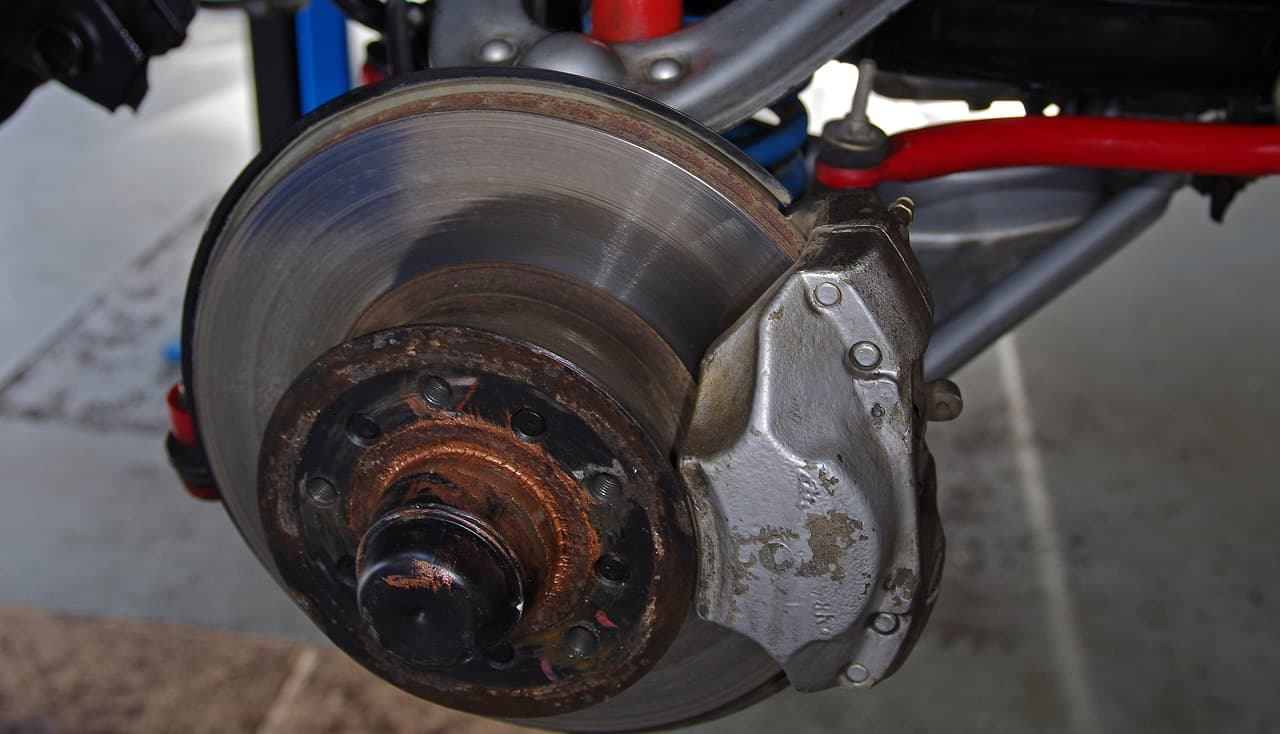
GMC Brake Pedal Pulsation and Steering Shake: Causes
A pulsing pedal or shaking wheel under braking usually means uneven rotor thickness from pad deposits, not a heat-warped rotor. How to find and fix it.
 GMC Brakes
GMC Brake Noise Chart: What Each Sound Means
Match your GMC brake noise, from squealing and grinding to creaking when the pedal is pressed, to its likely cause and how urgently to act.
 GMC Brakes
GMC Brake Error Message: Causes and Solutions
A GMC brake error often traces to wheel speed sensors, low brake fluid, the ABS module, or wiring. See the symptoms, diagnostic steps, and fixes.
 GMC Brakes
What Does GMC Lifetime Brake Service Really Cover?
GMC lifetime brake service covers replacement pads for as long as you own the vehicle, but not labor, rotors, calipers or fluid. See if it's worth it.
 GMC Brakes
GMC Brake Booster: Vacuum vs. Hydroboost Explained
A GMC brake booster multiplies pedal force using engine vacuum or power steering pressure. Learn which type your truck has and how to test it.
 GMC Brakes
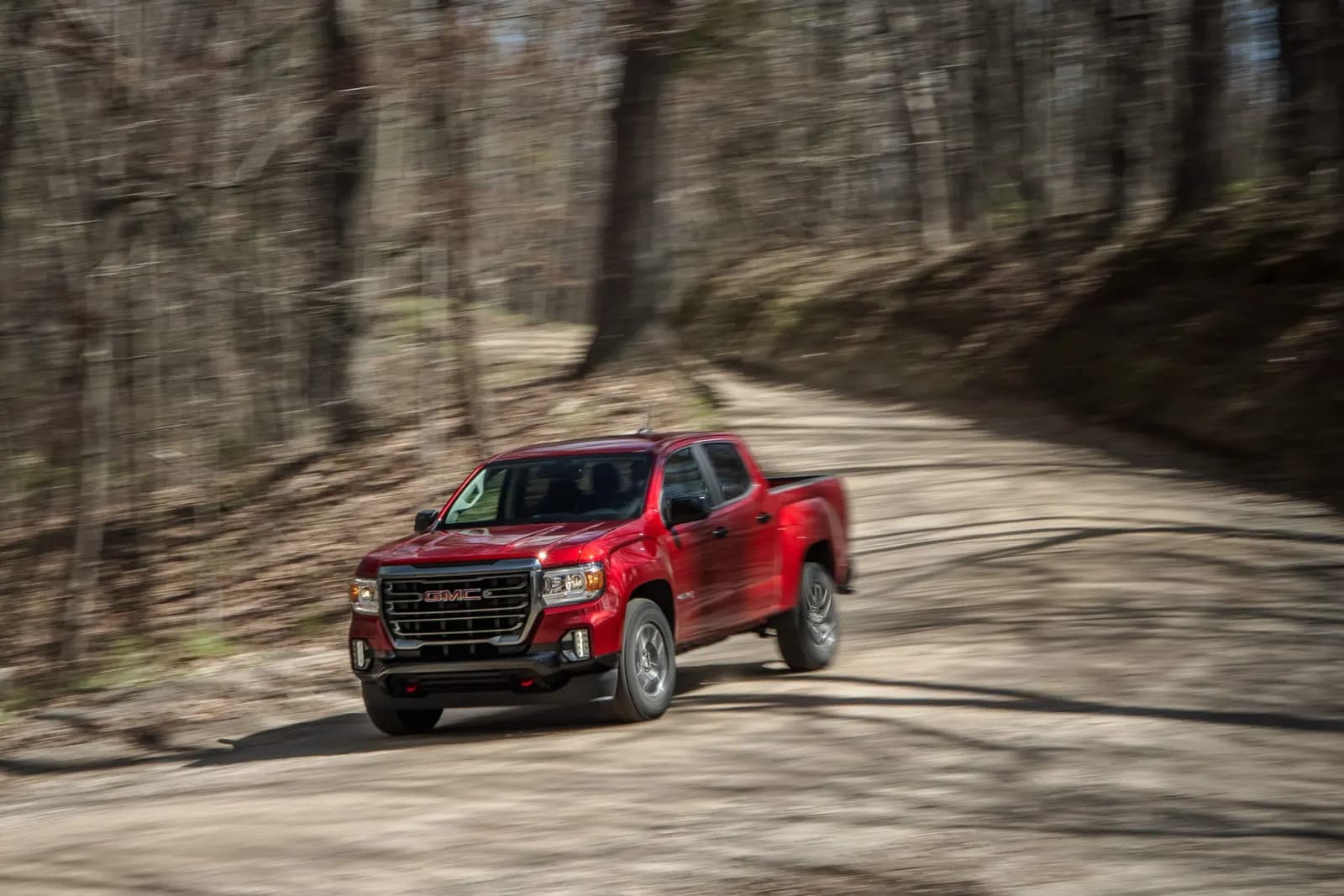
GM Throttle Body Fix for 2021 GMC Canyon Duramax Diesel
GM Special Coverage N242445290 covers a throttle body calibration fault on the 2021 GMC Canyon 2.8L Duramax. Learn the symptoms and the free dealer fix.
More in GMC Brake Problems
- Rear Disc Brake Conversion for GMC Sierra 1500 (2005-2013)
- 2008 GMC Yukon Brake Light Bulb Size (2007-2014 Chart)
- GMC Envoy Third Brake Light and Moulding (2002-2009)
- GMC Yukon Brake Replacement Cost: Pads, Rotors, Calipers
- How GMC Brake Systems Work: Hydraulics to StabiliTrak
- GMC Brake Maintenance: Intervals, Fluid, Towing, Winter
- GMC Canyon Brake Problems and Recalls by Generation
- GMC Yukon Brake System Guide (2015-2023)
- How to Bleed GMC Sierra Brakes: Sequence and Steps
- Changing Rear Drum Brakes on a 2007-2013 GMC Sierra 1500
- GMC Big Brake Kits: Wheel Clearance, Fitment, Options
- GMC Sierra & Yukon Brake Line Diagram and Repair Guide