How GMC Brake Systems Work: Hydraulics to StabiliTrak
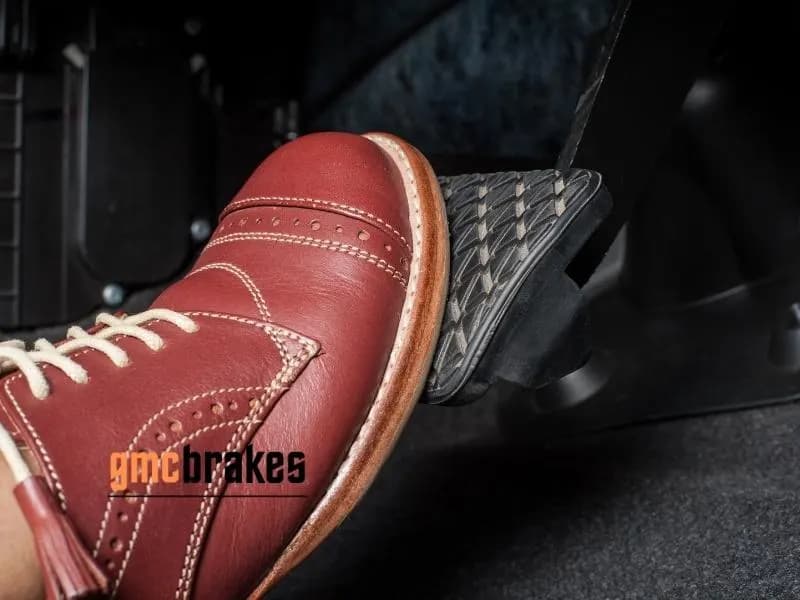
A GMC brake system turns pedal force into hydraulic pressure. A booster multiplies your foot's force, the master cylinder converts it into fluid pressure, and that pressure travels through steel lines and rubber hoses to calipers or wheel cylinders that press friction material against spinning rotors or drums. On top of that hydraulic base, an electronic brake control module runs ABS, traction control, StabiliTrak, and brake assist by adjusting pressure at individual wheels.
The Path from Pedal to Wheel
| Stage | Component | What it does |
|---|---|---|
| 1 | Brake pedal | Lever that multiplies foot force mechanically |
| 2 | Brake booster | Adds assist from engine vacuum, a vacuum pump, or power steering pressure (hydroboost) |
| 3 | Master cylinder | Converts pushrod force into hydraulic pressure in two separate circuits |
| 4 | ABS hydraulic unit | Passes pressure through in normal braking; modulates it at each wheel when needed |
| 5 | Lines and hoses | Steel lines along the body or frame, flexible hoses at each wheel |
| 6 | Calipers or wheel cylinders | Pistons push pads against rotors or shoes against drums |
| 7 | Pads and rotors, or shoes and drums | Friction turns the vehicle's motion into heat |
Hydraulics: Why a Light Push Stops a Heavy Truck
Brake fluid is essentially incompressible, so pressure created at the master cylinder reaches every wheel almost instantly. The caliper pistons have much more surface area than the master cylinder piston, so the same pressure produces a much larger clamping force at the wheel. The trade-off is travel: the pedal moves much farther than the pads do.
The master cylinder is split into two independent circuits. If one circuit loses fluid through a leaking line or hose, the other can still stop the vehicle, though the pedal will travel farther and stopping distances grow. A leak or low fluid level typically turns on the red brake warning light. Our master cylinder guide covers failure signs.
Because air compresses and fluid doesn't, any air in the system makes the pedal soft. That's why brakes are bled after the hydraulic system has been opened. See how to bleed GMC Sierra brakes.
Brake Fluid
GMC vehicles use glycol-based fluid, with the grade printed on the reservoir cap and in the owner's manual. Federal Motor Vehicle Safety Standard 116 sets minimum boiling points for each grade: 401°F dry and 284°F wet for DOT 3, and 446°F dry and 311°F wet for DOT 4 (49 CFR 571.116). The "wet" figure matters because the fluid absorbs moisture over time, and fluid that boils in a hot caliper leaves vapor in the lines and a soft pedal. That is the reason fluid has a replacement interval. Our brake fluid types guide goes deeper.
Power Assist: Vacuum Booster or Hydroboost
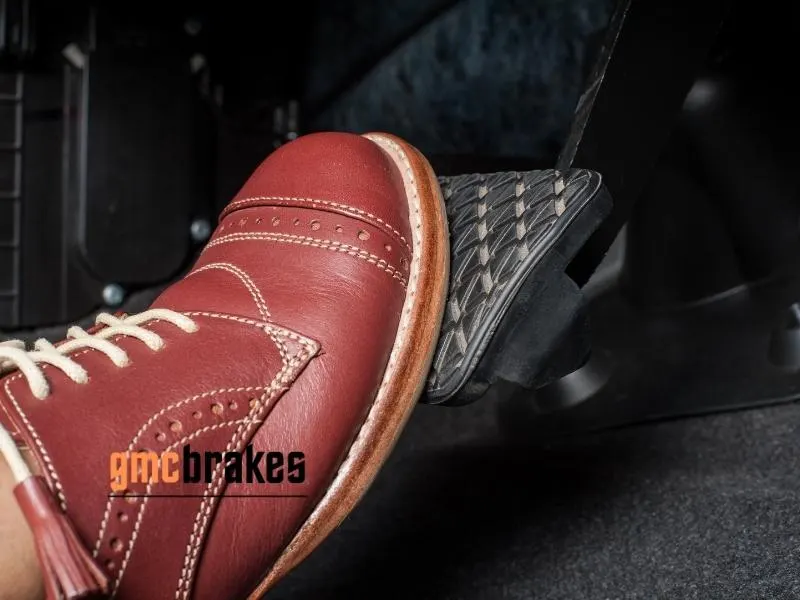
Without assist, stopping a full-size truck would take far more pedal force than most drivers can comfortably apply. GMC uses two kinds of booster:
- Vacuum boosters use the pressure difference between engine vacuum and outside air acting on a large diaphragm. Some newer gas engines use an engine-driven vacuum pump to keep the booster supplied.
- Hydroboost units use pressurized fluid from the power steering pump. They're common on diesel and many heavy-duty trucks, since diesel engines don't produce the intake vacuum a conventional booster needs.
Some trucks also have a hydraulic backup. GM's recall filing for certain 2014-2018 Sierra 1500 and related models describes a secondary hydraulic brake assist, run by the brake control module, that activates when vacuum drops (NHTSA recall 19V-645). Our brake booster guide compares the two designs and explains how to test each one.
Disc Brakes and Drum Brakes
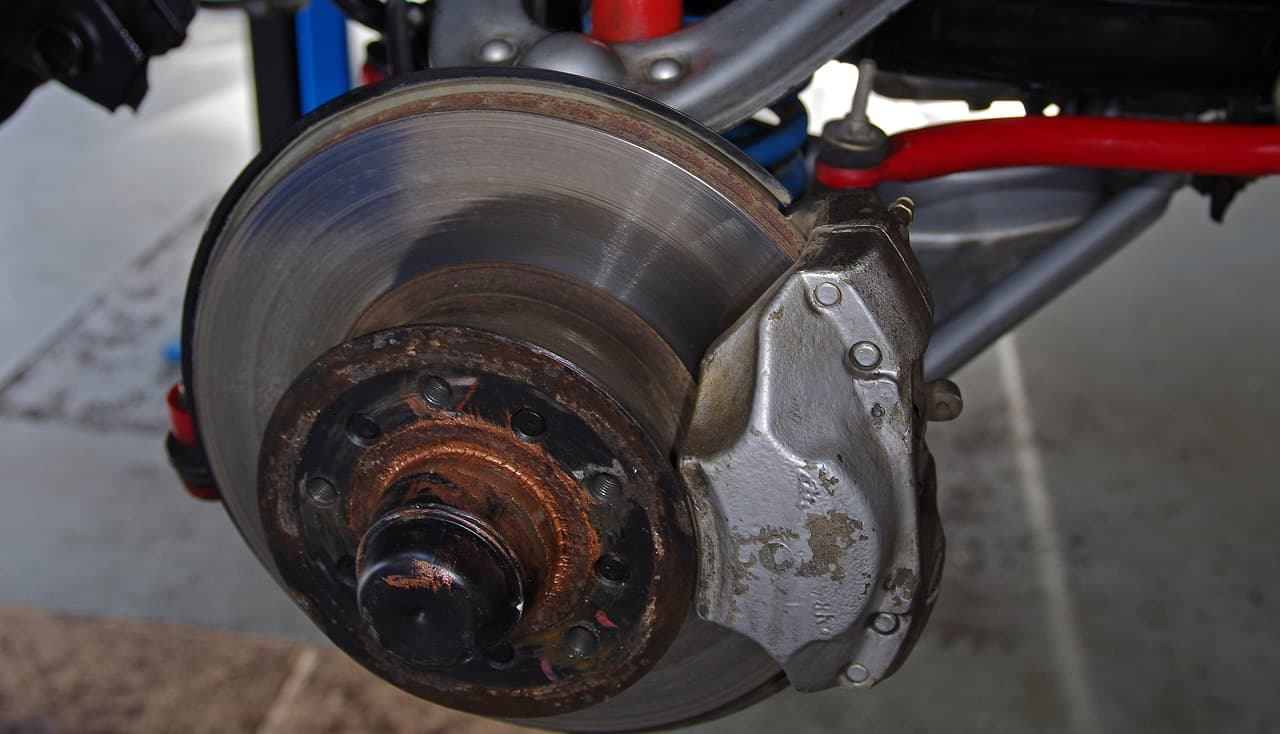
Disc brakes clamp a rotor between two pads using a caliper. The rotor is exposed to air, so it sheds heat well and recovers quickly from repeated stops. Disc brakes also self-adjust as the pads wear. Our caliper guide covers how they work and fail.
Drum brakes push two curved shoes outward against the inside of a drum. They're cheaper and make a simple, effective parking brake, but they hold heat inside the drum and fade sooner under hard, repeated use. See our GMC brake drums guide and the 2008 Sierra drum brake walkthrough.
Front brakes do most of the work in a stop, because weight shifts forward under braking. That's why every GMC truck has had front discs for decades, while the rear has switched between discs and drums over the years:
| Sierra generation | Rear brakes (as built) |
|---|---|
| 1988-1998 C/K Sierra (GMT400) | Rear drums on standard pickups; four-wheel discs on the C3500HD |
| 1999-2004 Sierra 1500 (GMT800) | Four-wheel discs |
| 2005-2007 Sierra 1500 (GMT800) | Most switched to rear drums; Denali and Hybrid kept rear discs; heavy-duty trucks kept four-wheel discs |
| Current Sierra 1500 | Four-wheel discs |
NHTSA's corrosion investigation of GMT800 trucks confirms the mid-run change from rear discs to rear drums on the 1500 (NHTSA EA11-001). For generations not listed, check your truck directly or by VIN, since brake packages varied by trim, drivetrain, and weight rating.
How the Rear Brakes Get the Right Share
When a truck brakes hard, weight shifts forward and the rear wheels, especially on an empty pickup, lock up much more easily than the fronts. Older trucks handled this with a mechanical proportioning valve that limited rear pressure. Modern GMC vehicles do it electronically. The brake control module compares front and rear wheel speeds and holds back rear pressure through the ABS valves, a function usually called electronic brake-force distribution. It adapts automatically as the bed is loaded or a trailer is hitched.
ABS: Keeping the Wheels Turning
Federal brake standards define an antilock brake system as the part of the service brakes that automatically controls wheel slip by sensing each wheel's rotation, sending that data to a controller, and having modulator valves adjust brake pressure in response (49 CFR 571.135).
In practice, a wheel speed sensor at each wheel reports how fast it's turning. If one wheel slows much faster than the vehicle, meaning it's about to lock, the module closes an inlet valve to hold pressure, opens an outlet valve to release some, and uses a pump to return fluid and reapply. This cycle repeats many times per second, which is the buzzing and pedal pulsation you feel in a panic stop. A rolling tire can still steer, while a locked one just slides.
GM pickups adopted ABS in stages. On the GMT400 C/K trucks, rear-wheel antilock arrived first, and four-wheel ABS replaced it later in that generation's run. Today it's standard across the lineup. For the full explanation and what the amber ABS light means, see ABS brakes in GMC vehicles.
Traction Control and StabiliTrak
The same hydraulic unit and wheel speed sensors do more than ABS:
- Traction control brakes a wheel that's spinning under acceleration, sending torque to the wheel with grip, and can reduce engine power.
- StabiliTrak, GM's name for electronic stability control, adds a steering angle sensor and a yaw rate sensor. When the vehicle isn't turning the way the steering wheel says it should, the system brakes individual wheels to bring it back in line. It brakes an outside front wheel to correct oversteer and an inside rear wheel to correct understeer.
Electronic stability control has been required by federal standard FMVSS 126 on all passenger cars, SUVs, and light trucks with a gross vehicle weight rating of 10,000 pounds or less built on or after September 1, 2011 (49 CFR 571.126). Because ABS and StabiliTrak share sensors and hardware, one fault often triggers several warnings at once, as covered in Service StabiliTrak and brakes.
On trucks with an integrated trailer brake controller, the module also manages trailer brake output, and StabiliTrak's trailer sway control can apply the truck's and trailer's brakes to calm a swaying trailer. See how to use a GMC trailer brake controller.
Brake Assist and Automatic Emergency Braking
Brake assist watches how fast you hit the pedal. Many drivers in a real emergency press quickly but not hard enough. When the system detects a panic-speed application, it builds full braking pressure for you. Details and the related warning are in our GMC brake assist guide and Service Brake Assist warning explainer.
Automatic emergency braking, available on newer GMC models, uses a forward camera and/or radar to detect an imminent front collision and applies the brakes if the driver doesn't. It relies on the same electronic control of the hydraulic unit. See GMC automatic emergency braking.
Parking Brake
The parking brake works independently of the hydraulic system. Older and many current trucks use a cable to apply the rear drums or a small drum-in-hat brake inside the rear rotors. Some newer models use an electric parking brake that a switch applies. See our GMC parking brake guide and electronic parking brake on the 2023 Sierra.
Warning Lights That Tie It Together
| Light | Color | What it usually means |
|---|---|---|
| BRAKE | Red | Parking brake applied, low fluid, or a hydraulic fault. Stop and check before driving on. |
| ABS | Amber | Antilock function disabled; normal braking still works |
| StabiliTrak / traction | Amber | Stability or traction control off or faulted |
| Service Brake Assist | Message | Reduced power assist detected |
Federal rules require separate indicators: a red one for a gross loss of fluid or pressure and for an applied parking brake, and a yellow one for an electrical failure in the antilock system (FMVSS 135). Our brake warning light and message chart lists what each GMC message means and where to go next.
Frequently Asked Questions
How does the brake system work on a GMC Sierra?
Pressing the pedal pushes the booster and master cylinder, which pressurize brake fluid in two separate circuits. That pressure moves pistons in the calipers or wheel cylinders, forcing pads against rotors or shoes against drums. The brake control module adjusts pressure at individual wheels for ABS, traction control, StabiliTrak, and brake assist.
Does my GMC have disc brakes or drum brakes in the rear?
It depends on the generation and trim. Current Sierra 1500 trucks use four-wheel discs, while many 2005-2007 GMT800 half-tons and most standard 1988-1998 GMT400 pickups used rear drums. Look through the rear wheel: a drum is a closed round housing, while a disc shows an exposed rotor and caliper.
Is ABS the same as StabiliTrak?
No, but they share hardware. ABS prevents wheel lock during braking. StabiliTrak uses the same hydraulic unit and wheel speed sensors, plus steering and yaw sensors, to brake individual wheels when the vehicle starts to skid sideways.
Why does my brake pedal pulse during a hard stop?
That's ABS working. The system is rapidly releasing and reapplying pressure at a wheel that's about to lock. Keep firm pressure on the pedal and steer. Pulsing during normal, gentle stops is different and usually points to rotor thickness variation.
Safety note: This guide is for general informational purposes. Brake systems are safety-critical — if you're unsure at any step, or the work requires specialized tools, have it inspected or completed by a qualified technician.
Related Guides
 GMC Brakes
GMC Brake Pedal Pulsation and Steering Shake: Causes
A pulsing pedal or shaking wheel under braking usually means uneven rotor thickness from pad deposits, not a heat-warped rotor. How to find and fix it.
 GMC Brakes
GMC Brake Noise Chart: What Each Sound Means
Match your GMC brake noise, from squealing and grinding to creaking when the pedal is pressed, to its likely cause and how urgently to act.
 GMC Brakes
GMC Brake Error Message: Causes and Solutions
A GMC brake error often traces to wheel speed sensors, low brake fluid, the ABS module, or wiring. See the symptoms, diagnostic steps, and fixes.
 GMC Brakes
What Does GMC Lifetime Brake Service Really Cover?
GMC lifetime brake service covers replacement pads for as long as you own the vehicle, but not labor, rotors, calipers or fluid. See if it's worth it.
 GMC Brakes
GMC Brake Booster: Vacuum vs. Hydroboost Explained
A GMC brake booster multiplies pedal force using engine vacuum or power steering pressure. Learn which type your truck has and how to test it.
 GMC Brakes
GM Throttle Body Fix for 2021 GMC Canyon Duramax Diesel
GM Special Coverage N242445290 covers a throttle body calibration fault on the 2021 GMC Canyon 2.8L Duramax. Learn the symptoms and the free dealer fix.
More in GMC Brake Problems
- Rear Disc Brake Conversion for GMC Sierra 1500 (2005-2013)
- 2008 GMC Yukon Brake Light Bulb Size (2007-2014 Chart)
- GMC Envoy Third Brake Light and Moulding (2002-2009)
- GMC Yukon Brake Replacement Cost: Pads, Rotors, Calipers
- GMC Brake Maintenance: Intervals, Fluid, Towing, Winter
- GMC Canyon Brake Problems and Recalls by Generation
- GMC Yukon Brake System Guide (2015-2023)
- How to Bleed GMC Sierra Brakes: Sequence and Steps
- Changing Rear Drum Brakes on a 2007-2013 GMC Sierra 1500
- GMC ABS Brakes: How They Work and Why the Light Comes On
- GMC Big Brake Kits: Wheel Clearance, Fitment, Options
- GMC Sierra & Yukon Brake Line Diagram and Repair Guide