GMC Sierra & Yukon Brake Line Diagram and Repair Guide
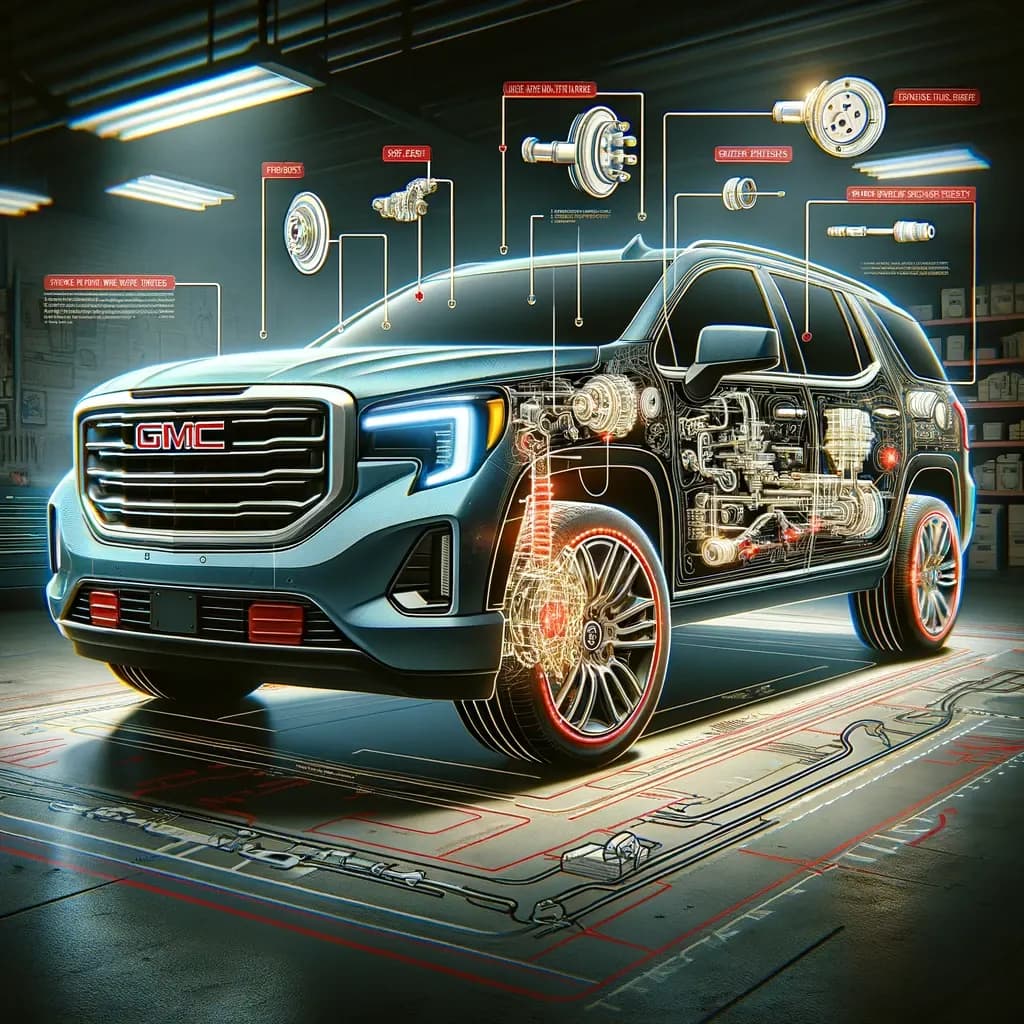
On a 1999-2007 GMC Sierra or 2000-2006 Yukon (the GMT800 generation), two steel lines run from the master cylinder to the ABS modulator on the inboard side of the left frame rail, under the driver's seat, and three lines leave it: one to each front caliper and one that runs back along the left frame rail to the rear axle. Exact routing still varies by cab, bed, drivetrain and brake package, so the factory service manual or a VIN-matched line kit is the final word. The biggest real-world problem on these trucks is not routing but corrosion, which NHTSA investigated from 2010 to 2015.
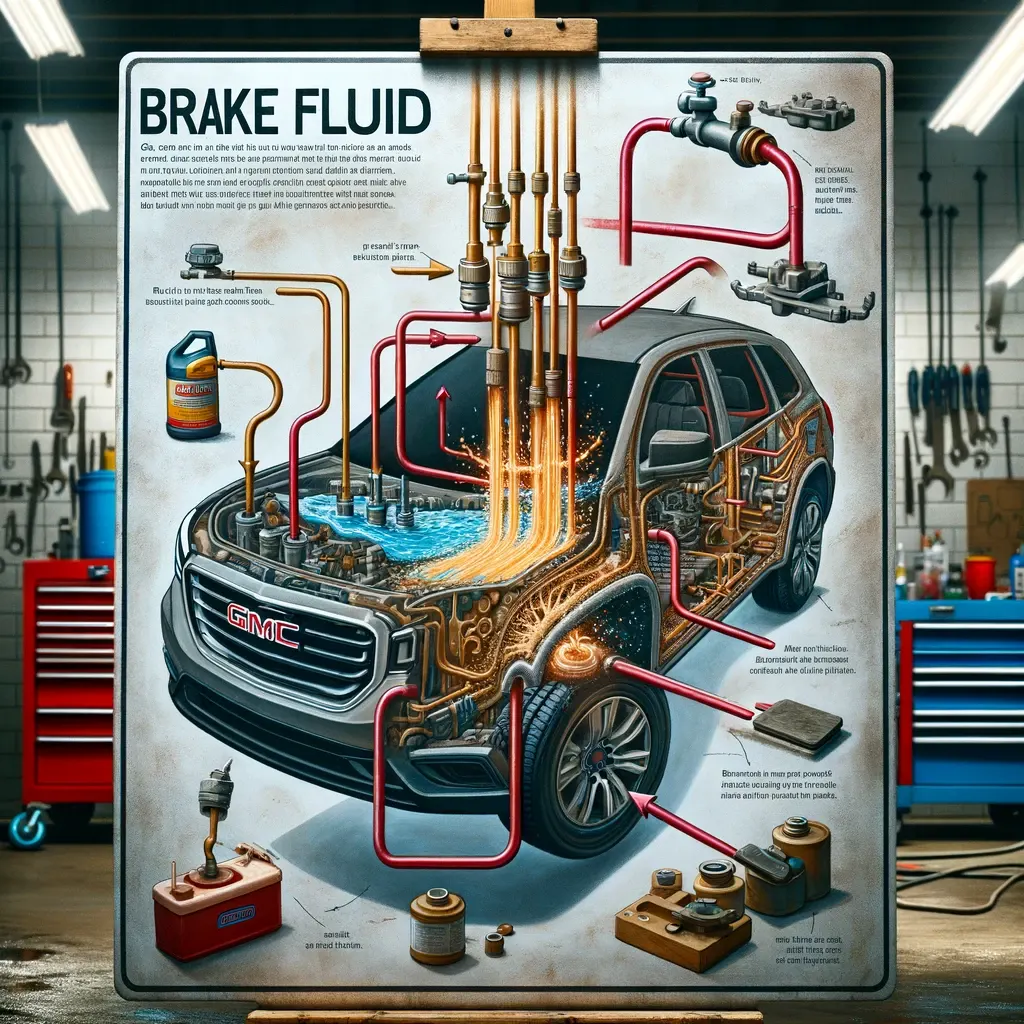
Which Generation Is Your Truck?
Brake line layouts follow the platform, not the individual model year, so start by identifying the generation. The years below are the U.S. model years for GMC's light-duty trucks.
| Generation | GMC Sierra | GMC Yukon | Brake pipe coating (per NHTSA) |
|---|---|---|---|
| GMT400 | 1988 to 1998 light-duty (some heavy-duty C/K models ran longer) | Early 1990s to 1999 | Not covered in the NHTSA report |
| GMT800 | 1999 to 2007 (the 2007 carryover is sold as the "Classic") | 2000 to 2006 | AlGal: zinc-aluminum layer under an aluminum-rich paint |
| GMT900 | 2007 (new body) to 2013 | 2007 to 2014 | NyGal: zinc-aluminum layer under an extruded nylon coating |
Two points trip people up here. A 1999 Yukon is still the older GMT400 truck, even though a 1999 Sierra is a GMT800. And 2007 has two different Sierras: the carryover "Classic" is GMT800, while the redesigned truck is GMT900. The body style and the VIN settle it before you order any lines.
GMT800 Brake Line Diagram (1999-2007 Sierra, 2000-2006 Yukon)
NHTSA's engineering analysis of these trucks describes the layout in plain terms. The system is a dual-circuit, front/rear split: one hydraulic circuit feeds the front brakes and the other feeds the rear. According to the report, GM used 66 different brake pipe routing configurations across the GMT800 lineup, but all of them share the same basic pattern.
Master cylinder to ABS modulator (2 lines):
- Primary circuit line, which serves the front brakes
- Secondary circuit line, which serves the rear brakes
Both run from the master cylinder back along the frame to the front face of the ABS modulator.
ABS modulator to the wheels (3 lines):
- Left front line, routed forward to the left front caliper
- Right front line, routed forward and across to the right front caliper
- Rear line, routed rearward along the left frame rail to the rear axle, where it splits to the left and right rear brakes through the axle lines and a flexible hose
That is why many owners describe the GMT800 ABS unit as having "five lines." The three outlet lines come off the upper part of the modulator's front face.
What changes between configurations
- Cab and bed length. The rear line length and clip locations change with wheelbase, which is a large part of why there are dozens of configurations.
- Proportioning valve. Some GMT800 trucks use a brake proportioning combination valve with a differential pressure switch, while others rely on a fluid level sensor in the master cylinder reservoir to light the red BRAKE warning.
- Rear brakes. NHTSA notes that GM changed the rear brake line in the 2005 model year to go with a switch from rear disc to rear drum brakes. Rear lines for a 2003 and a 2005 Sierra may not be interchangeable.
- Heavy-duty trucks. The 2500 and 3500 Sierras and the 2500 Yukon XL use different parts than the 1500s. Don't use a 1500 diagram on an HD truck.
Why the ABS port labels vary
Older articles, including earlier versions of the posts merged into this guide, describe the modulator ports with labels like "lower inboard" or "upper outboard." Those labels are not consistent from one source to the next, and they vary with the modulator and valve arrangement. Before you loosen anything at the modulator, tag each line with tape and note where it goes, or take a clear photo. Mixing up the front and rear circuits at the modulator makes the ABS work against the brakes it's supposed to control.
GMT900 Brake Lines (2007-2013 Sierra, 2007-2014 Yukon)
GM redesigned the brake pipes for the GMT900 platform. The biggest change you can see is the coating: NHTSA reports these trucks use NyGal pipe with an extruded nylon (PA12) outer layer, which it describes as roughly 50 times thicker than the aluminum paint on the GMT800 lines and better at resisting stone chips. That doesn't mean GMT900 lines never rust; salt-state trucks of this age still need regular line inspections.
We could not confirm a published GMT900 port-by-port layout for the ABS modulator from a primary source, so it isn't given here. Use the GM service information for your VIN, or the routing sheet that comes with a pre-bent kit for your exact cab, bed and drivetrain.
How to Read a Factory Brake Line Diagram
When you work from a factory or kit routing diagram:
- Find the master cylinder and the ABS modulator first. Every line starts at one or the other.
- Follow each circuit separately. On a front/rear split system, a leak affects only the brakes on that circuit.
- Note the clip and retainer locations. They matter as much as the route, because a line that isn't clipped can vibrate and chafe.
- Check the flexible hose locations: one at each front wheel, and one at the rear axle. Hoses are serviced separately from the steel lines.
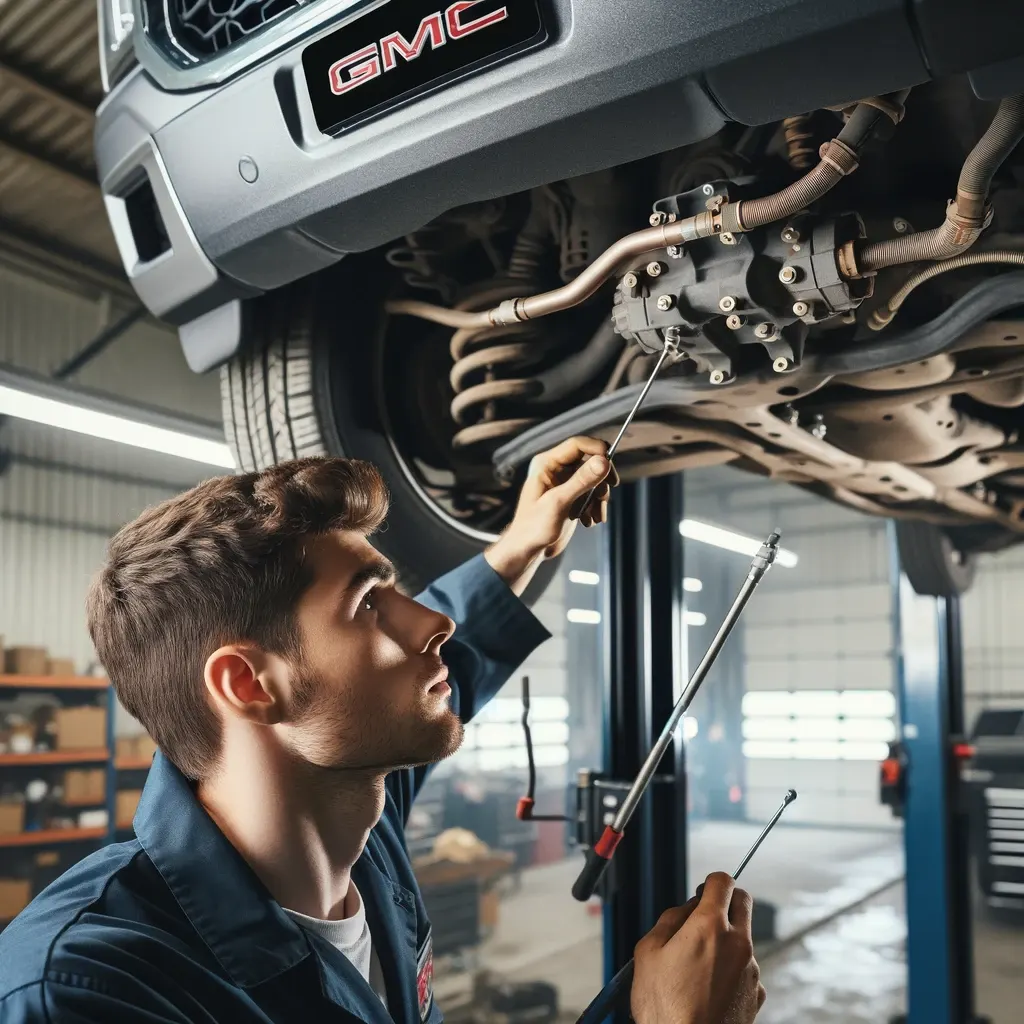
The 2010-2015 NHTSA Brake Line Corrosion Investigation
This is the part of GMT800 brake line history most often reported wrong, including in this site's older posts. From NHTSA's own documents:
- How it started. On March 2, 2010, the owner of a 2003 Chevrolet Silverado 2500HD petitioned NHTSA. The agency granted the petition and opened Preliminary Evaluation PE10-010 on March 30, 2010. It covered an estimated 6 million 1999-2003 GM C/K pickups and SUVs and was based on 110 complaints, 3 of which alleged crashes.
- Upgrade, not a reopening. On January 5, 2011, the preliminary evaluation was upgraded to Engineering Analysis EA11-001, which focused on 1999-2003 GMT800 trucks in "salt states."
- Models. The Chevrolet Silverado, GMC Sierra, Chevrolet Tahoe, Suburban and Avalanche, GMC Yukon and Yukon XL, and Cadillac Escalade.
- What the data showed. Through December 2014, NHTSA counted 3,049 complaints for the 1999-2003 trucks, 2,702 of them from salt states, and 94 alleged crashes. Failures typically began after about 7 years in service in salt states.
- How it closed. EA11-001 was closed on April 9, 2015, without a recall. NHTSA found general corrosion across most of the pipe assembly, not a routing or clip defect, and attributed the failures to wear-out of the AlGal coating in severe road-salt environments. It also found similar corrosion rates on Ford and Chrysler trucks of the same age that used the same type of coating.
- What GM did. On June 28, 2013, GM released 66 pre-formed, pre-flared brake pipe kits covering 1999-2007 GMT800 trucks and SUVs, and dealers were told about them in Technical Service Bulletin 13-05-22-001. GM's recommendation is to replace the entire set of pipes whenever any pipe is leaking or badly corroded.
- Advisory. When it closed the investigation, NHTSA issued a safety advisory for owners of 2007 and older vehicles. It told them to wash the undercarriage during and after winter, have the brake pipes inspected (twice a year for older vehicles in cold-weather states), and replace the pipe assembly if corrosion is severe.
In short, there was an investigation but no recall for GMT800 brake line corrosion. Other GM brake recalls exist for different trucks and different causes, so check your truck by VIN on NHTSA's recall lookup instead of relying on any article. Our GM service brake system recall guide covers the recalls that do exist.
Signs of a Rusted or Failing Brake Line
- A brake pedal that suddenly drops toward the floor, often during a hard stop, when a weakened line bursts under peak pressure
- A soft or spongy pedal that gets worse over days (see our soft brake pedal troubleshooting guide)
- A falling fluid level in the master cylinder reservoir with no pad wear to explain it
- The red BRAKE warning light, which on these trucks comes from the fluid level sensor or the pressure differential switch
- Wet spots or a fluid trail along the left frame rail, at the modulator, or over the rear axle
- Flaking or scaling on the steel lines, as opposed to light surface rust
Because the system is split front to rear, a burst line usually leaves you with one working circuit. FMVSS 105 test results for a 1999 Silverado 1500, published in the NHTSA report, show how much that hurts: losing the front circuit on a lightly loaded truck is the worst case, because an empty pickup carries little weight on the rear tires.
How to Fix a Rusted Brake Line
Section repair or full replacement?
NHTSA found that owners often replaced only the line that failed. On a truck with general corrosion, that usually just moves the next failure somewhere else. GM's own guidance, as quoted in the NHTSA report, is to replace the complete pipe set when any pipe is leaking or has corrosion severe enough to need replacement. A line with heavy flaking can't be judged by eye; GM noted that remaining wall thickness can only be assessed by removing, cleaning and sectioning the pipe.
A single short section repair is reasonable only when the rest of the lines are clean and the damage has a clear local cause, such as a rock strike or a chafe point.
Pre-bent kit or bulk tubing?
| Option | Pros | Cons |
|---|---|---|
| GM or aftermarket pre-formed kit | No bending or flaring. The kit matches a specific configuration. GM's TSB labor guideline is 4.5 to 6.0 hours. | Must match cab, bed, drivetrain and brake package. Long kit pieces ship with bends that have to be opened up. |
| Bulk tubing, bent and flared by hand | Works for any configuration. Materials are cheap. | Takes much longer (NHTSA cites about 8.5 hours of base labor for full replacement without kits). Needs a proper double-flare or bubble-flare tool that matches the fitting. |
Aftermarket lines come in coated steel, stainless steel and copper-nickel. Copper-nickel bends by hand and resists salt corrosion. Stainless resists corrosion but is harder to bend and flare. Whatever you choose, match the flare type and fitting threads to the original.
Basic steps
- Get the routing for your exact configuration and label each line at the master cylinder and the ABS modulator before you remove anything.
- Soak the fittings with penetrating oil and use a flare-nut (line) wrench. Seized fittings on old lines often twist the tube, so plan on replacing the whole line rather than saving the fitting.
- Remove the old line together with its clips, and keep it as a bending template if you're using bulk tubing.
- Unfold any shipping bend on long kit sections gently, and route the new line through the original clip points so it can't vibrate against the frame, exhaust or fuel lines.
- Tighten the fittings to the service manual specification.
- Bleed the entire system. On ABS-equipped GMT800 and GMT900 trucks, a line replacement that opens the modulator may need the ABS automated bleed procedure run with a scan tool. Our Sierra brake bleeding guide covers the sequence.
- Check for leaks under pressure, confirm the pedal is firm and the BRAKE light is off, and then road test at low speed.
While the lines are exposed, check the flexible hoses too. Cracks, bulges or wet spots mean the hose should be replaced at the same time.
What it costs
Prices depend on the parts source, local labor rates, and how badly corroded the fittings are, so treat these as rough ranges that vary by region. A single hose or a short line section at an independent shop is often a few hundred dollars. A complete line set on a GMT800 truck usually costs more than $1,000 at a shop once labor is included. NHTSA noted that full replacement before the GM kits existed "often cost consumers well over $1,000," mostly because of labor.
Preventing Brake Line Corrosion
- Rinse the undercarriage regularly through the winter and thoroughly in spring, as NHTSA's advisory recommends
- Have the lines inspected at least once a year. For an older truck in a salt state, NHTSA suggests twice a year
- Replace brake fluid on the interval in your owner's manual; see brake fluid types for GMC Sierra models
- Make sure every line sits in its clips and isn't rubbing on the frame or the exhaust
For the rest of the hydraulic system, see our guides to the GMC ABS system, brake calipers and routine brake maintenance.
Frequently Asked Questions
Where is the ABS module on a GMT800 GMC Sierra or Yukon?
On 1999-2007 Sierra and 2000-2006 Yukon models, the ABS modulator is mounted on the inboard side of the left (driver's side) frame rail, under the driver's seat. Two lines come in from the master cylinder, and three lines go out: to the left front brake, to the right front brake, and back along the frame to the rear axle.
Was there a recall for rusted brake lines on 1999-2003 GMC trucks?
No. NHTSA investigated brake line corrosion on 1999-2003 GM full-size pickups and SUVs from March 2010 until April 2015 and closed the investigation without a recall. GM released pre-formed brake pipe kits for 1999-2007 GMT800 trucks in 2013, and NHTSA issued a safety advisory telling owners to wash their undercarriages and have the lines inspected.
Can I replace just the one brake line that burst?
You can, but on a truck with general corrosion it often leads to another failure soon after. GM recommends replacing the full set of brake pipes whenever one is leaking or badly corroded. A single section repair makes sense only when the other lines are in good condition.
Do I need a scan tool to bleed the brakes after replacing lines?
Often, yes. If the work opens the lines at the ABS modulator or lets air into it, GM's service procedure may call for the ABS automated bleed, which cycles the modulator valves using a scan tool. A standard bleed at each wheel can leave air trapped in the modulator.
Are 2007 GMC Sierra brake lines the same as 2006?
Not necessarily. For 2007, GM sold both the carryover GMT800 "Classic" and the redesigned GMT900 Sierra, and the two use different brake pipes. Check the body style and VIN before ordering lines.
Sources
- NHTSA, Engineering Analysis EA11-001 Closing Report: GMT800 brake pipe corrosion (system description, coatings, complaint data, GM kits and TSB)
- NHTSA, Preliminary Evaluation PE10-010 Opening Resume (March 30, 2010)
- Safety+Health Magazine (National Safety Council), NHTSA links road salt to brake pipe corrosion, failure (April 2015 advisory)
Safety note: This guide is for general informational purposes. Brake systems are safety-critical — if you're unsure at any step, or the work requires specialized tools, have it inspected or completed by a qualified technician.
Related Guides
 GMC Brakes
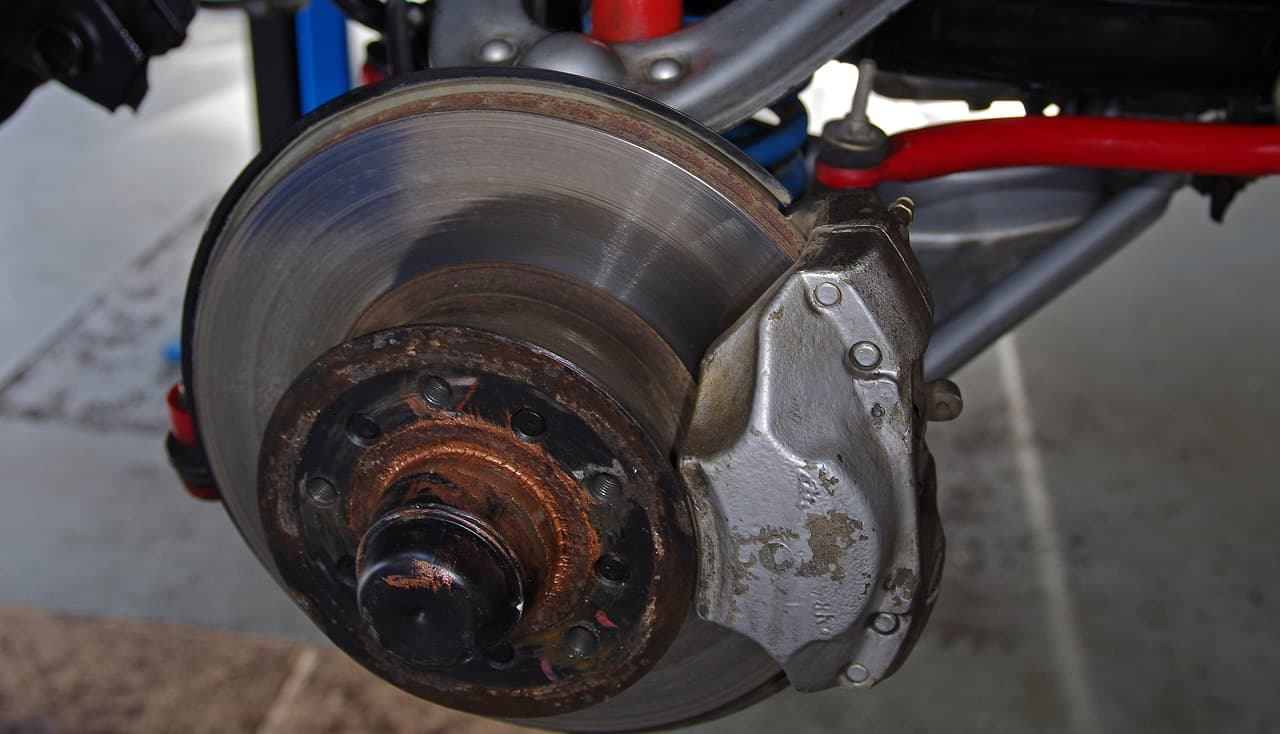
GMC Brake Pedal Pulsation and Steering Shake: Causes
A pulsing pedal or shaking wheel under braking usually means uneven rotor thickness from pad deposits, not a heat-warped rotor. How to find and fix it.
 GMC Brakes
GMC Brake Noise Chart: What Each Sound Means
Match your GMC brake noise, from squealing and grinding to creaking when the pedal is pressed, to its likely cause and how urgently to act.
 GMC Brakes
GMC Brake Error Message: Causes and Solutions
A GMC brake error often traces to wheel speed sensors, low brake fluid, the ABS module, or wiring. See the symptoms, diagnostic steps, and fixes.
 GMC Brakes
What Does GMC Lifetime Brake Service Really Cover?
GMC lifetime brake service covers replacement pads for as long as you own the vehicle, but not labor, rotors, calipers or fluid. See if it's worth it.
 GMC Brakes
GMC Brake Booster: Vacuum vs. Hydroboost Explained
A GMC brake booster multiplies pedal force using engine vacuum or power steering pressure. Learn which type your truck has and how to test it.
 GMC Brakes
GM Throttle Body Fix for 2021 GMC Canyon Duramax Diesel
GM Special Coverage N242445290 covers a throttle body calibration fault on the 2021 GMC Canyon 2.8L Duramax. Learn the symptoms and the free dealer fix.
More in GMC Brake Problems
- Rear Disc Brake Conversion for GMC Sierra 1500 (2005-2013)
- 2008 GMC Yukon Brake Light Bulb Size (2007-2014 Chart)
- GMC Envoy Third Brake Light and Moulding (2002-2009)
- GMC Yukon Brake Replacement Cost: Pads, Rotors, Calipers
- How GMC Brake Systems Work: Hydraulics to StabiliTrak
- GMC Brake Maintenance: Intervals, Fluid, Towing, Winter
- GMC Canyon Brake Problems and Recalls by Generation
- GMC Yukon Brake System Guide (2015-2023)
- How to Bleed GMC Sierra Brakes: Sequence and Steps
- Changing Rear Drum Brakes on a 2007-2013 GMC Sierra 1500
- GMC ABS Brakes: How They Work and Why the Light Comes On
- GMC Big Brake Kits: Wheel Clearance, Fitment, Options